
Tablespoons to Cups Converter
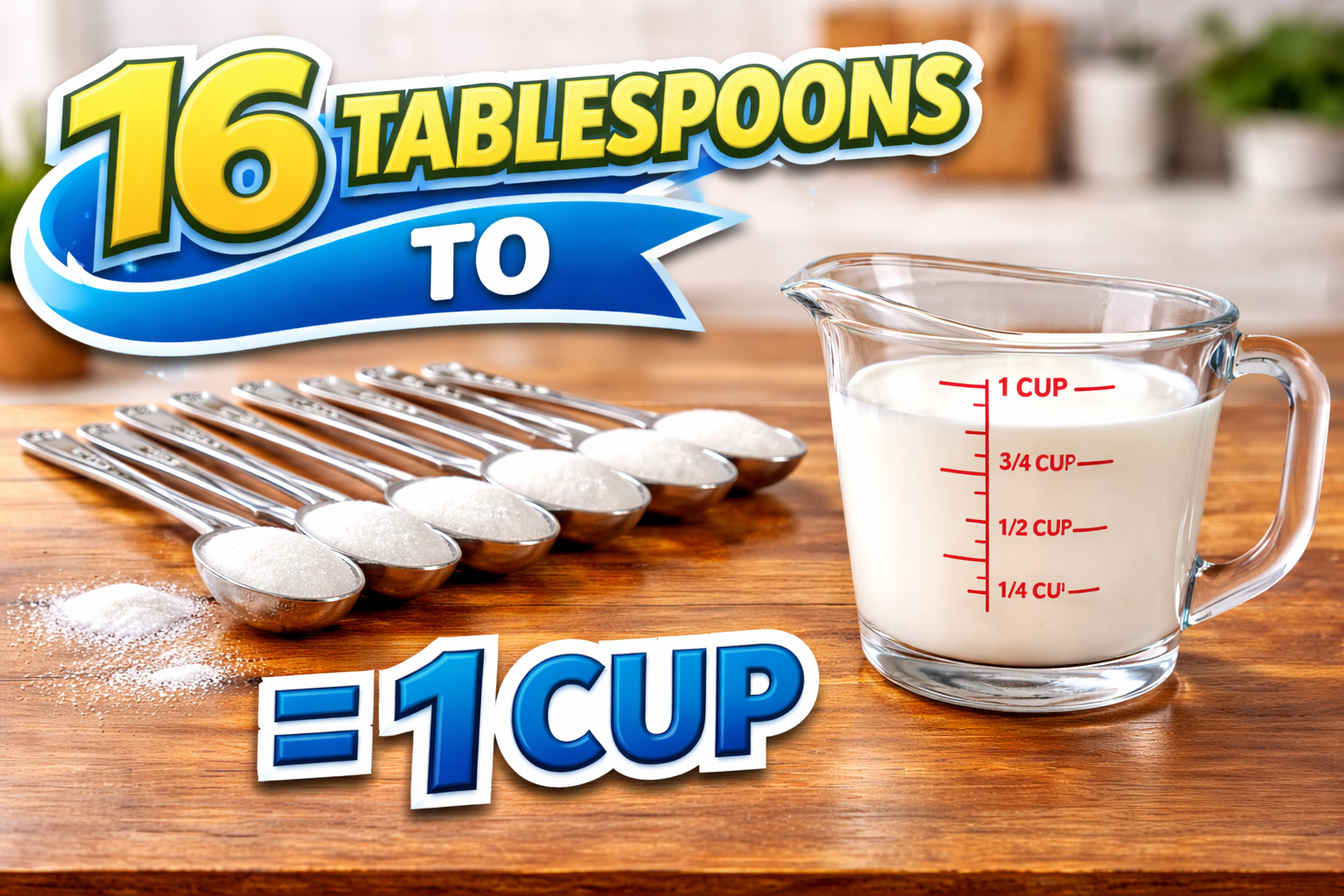
Automatically converts as you typeIf you’re curious how many cups are in 16 tablespoons, the answer is simple: 16 tablespoons equal 1 cup. This conversion is one of the most straightforward in the kitchen, and knowing it can make cooking, baking, and meal prep much easier. In this article, I’ll explain the conversion, give practical examples, and share tips to measure ingredients accurately.
The Simple Math Behind 16 Tablespoons
The conversion is easy to remember: 1 cup equals 16 tablespoons.
Formula:
Cups = Tablespoons ÷ 16
Example:
16 ÷ 16 = 1
So, when you have 16 tablespoons, it’s exactly 1 cup. This is helpful if you don’t have a cup measure on hand and need to use tablespoons instead.
Tips for Accurate Measurement
Accuracy matters in cooking and baking, and these tips can help:
- Level your tablespoons: Scoop and level each tablespoon to ensure precision.
- Use standard U.S. measurements: Tablespoons may vary in other countries, so stick to U.S. standards if following American recipes.
- Consider the ingredient type: While 16 tablespoons equal 1 cup for most dry and liquid ingredients, very dense or sticky items may need careful leveling.
Common Mistakes to Avoid
Even though converting 16 tablespoons to 1 cup is simple, beginners often make small errors that affect recipes. Here’s what to watch out for:
Not Leveling Tablespoons Properly
Scooping ingredients without leveling can lead to more than 1 cup, which can affect baking results. Always use a straight edge to level off each tablespoon.
Mixing Measurement Systems
Confusing U.S. tablespoons with metric tablespoons can cause inaccurate conversions. Stick to the measurement system your recipe specifies to ensure correct results.
Ignoring Ingredient Density
Dense or sticky items like peanut butter or brown sugar may need packing to measure correctly. Without this step, you could end up with more or less than the intended amount.
Assuming 16 Tablespoons Always Equals 1 Cup Worldwide
While 16 tablespoons equals 1 cup in the U.S., other countries may have slightly different cup sizes. Always check the measurement standard used in your recipe.
Being aware of these mistakes ensures your recipes turn out perfectly and reduces frustration in the kitchen.
Conversion chart from Tablespoons to Cups
| Tablespoons | Cups | Tablespoons | Cups | Tablespoons | Cups |
| 16.01 | 1.0006 | 16.34 | 1.0213 | 16.67 | 1.0419 |
| 16.02 | 1.0013 | 16.35 | 1.022 | 16.68 | 1.0425 |
| 16.03 | 1.0019 | 16.36 | 1.0225 | 16.69 | 1.0431 |
| 16.04 | 1.0025 | 16.37 | 1.0231 | 16.70 | 1.0438 |
| 16.05 | 1.0031 | 16.38 | 1.0238 | 16.71 | 1.0444 |
| 16.06 | 1.0038 | 16.39 | 1.0244 | 16.72 | 1.045 |
| 16.07 | 1.0044 | 16.40 | 1.025 | 16.73 | 1.0456 |
| 16.08 | 1.005 | 16.41 | 1.0256 | 16.74 | 1.0463 |
| 16.09 | 1.0056 | 16.42 | 1.0263 | 16.75 | 1.0469 |
| 16.10 | 1.0063 | 16.43 | 1.0269 | 16.76 | 1.0475 |
| 16.11 | 1.0069 | 16.44 | 1.0275 | 16.77 | 1.0481 |
| 16.12 | 1.0075 | 16.45 | 1.0281 | 16.78 | 1.0488 |
| 16.13 | 1.0081 | 16.46 | 1.0288 | 16.79 | 1.0494 |
| 16.14 | 1.0088 | 16.47 | 1.0294 | 16.80 | 1.05 |
| 16.15 | 1.0094 | 16.48 | 1.03 | 16.81 | 1.0506 |
| 16.16 | 1.01 | 16.49 | 1.0306 | 16.82 | 1.0513 |
| 16.17 | 1.0106 | 16.50 | 1.0313 | 16.83 | 1.0519 |
| 16.18 | 1.0113 | 16.51 | 1.0319 | 16.84 | 1.0525 |
| 16.19 | 1.0119 | 16.52 | 1.0325 | 16.85 | 1.0531 |
| 16.20 | 1.0125 | 16.53 | 1.0331 | 16.86 | 1.0538 |
| 16.21 | 1.0131 | 16.54 | 1.0338 | 16.87 | 1.0544 |
| 16.22 | 1.0138 | 16.55 | 1.0344 | 16.88 | 1.055 |
| 16.23 | 1.0144 | 16.56 | 1.035 | 16.89 | 1.0556 |
| 16.24 | 1.015 | 16.57 | 1.0356 | 16.90 | 1.0563 |
| 16.25 | 1.0156 | 16.58 | 1.0363 | 16.91 | 1.0569 |
| 16.26 | 1.0163 | 16.59 | 1.0369 | 16.92 | 1.0575 |
| 16.27 | 1.0169 | 16.60 | 1.0375 | 16.93 | 1.0581 |
| 16.28 | 1.0175 | 16.61 | 1.0381 | 16.94 | 1.0588 |
| 16.29 | 1.0181 | 16.62 | 1.0388 | 16.95 | 1.0594 |
| 16.30 | 1.0188 | 16.63 | 1.0394 | 16.96 | 1.06 |
| 16.31 | 1.0194 | 16.64 | 1.04 | 16.97 | 1.0606 |
| 16.32 | 1.02 | 16.65 | 1.0406 | 16.98 | 1.0613 |
| 16.33 | 1.0206 | 16.66 | 1.0413 | 16.99 | 1.0619 |
FAQs
Q1: How many tablespoons are in 1 cup?
A1: 1 cup equals 16 tablespoons.
Q2: Can I measure 16 tablespoons directly as 1 cup?
A2: Yes, it’s an exact conversion, so you can measure either way.
Q3: How many cups are in 32 tablespoons?
A3: 32 tablespoons equal 2 cups.
Q4: Does this conversion work for liquids and dry ingredients?
A4: Yes, for most recipes, 16 tablespoons equal 1 cup for both dry and liquid ingredients.
Q5: Why is leveling tablespoons important?
A5: Leveling ensures precise measurement, which is especially critical in baking where even small differences affect the outcome.